Three Strikes and Mandatory Sentencing
Scroll for more“Tough on crime" sentencing policies sent more people to prison and kept them incarcerated longer.
In the wake of the Civil Rights Era, racially-coded “tough on crime” sentencing policies emerged. These laws not only sent more people to prison but also locked them up for longer. In 1972, there were 300,000 people in American jails and prisons. Today, there are 2.2 million.
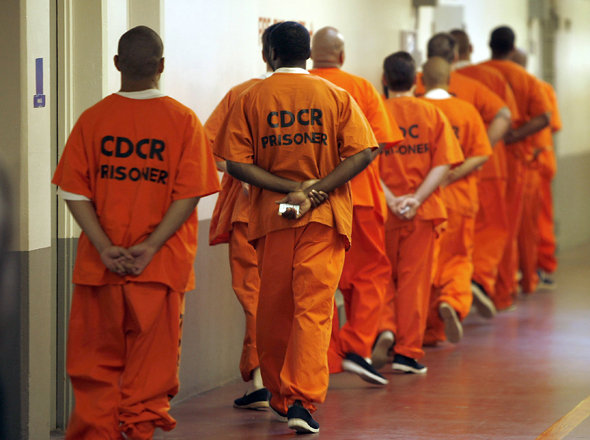
Photo: Tony Avelar/Christian Science Monitor/The Image Works
Following the Civil Rights Movement, politicians created the blueprint for the new Jim Crow. The “war on drugs” began and “tough on crime” sentencing practices took hold in states across the country as well as in the federal system, including “three strikes” laws that permit or require life-without-parole sentences for repeat offenders, “truth-in-sentencing” laws that abolished parole, and mandatory minimum sentencing laws that imposed lengthy sentences regardless of mitigating circumstances.
In 1995, Jerry Dewayne Williams, an African American man, received a life sentence under California’s three strikes law for stealing a slice of pepperoni pizza. That same year, also in California, a 33-year-old Black man named Curtis Wilkerson was arrested and later sentenced to life in prison for stealing a pair of white socks worth $2.50. Both life sentences were mandatory.
Mandatory sentencing promised neutrality but in fact merely transferred power from judges to prosecutors, who choose which cases to bring. Prosecutors, who are generally elected, often charge the offense that carries the greatest penalty, in order to frighten defendants into pleading guilty. Studies show that even innocent defendants feel compelled to accept such offers to avoid lengthy prison terms, which legal commentators refer to as “the trial penalty.” As Rodney Roberts, a Black man who was exonerated years after his guilty plea put it, “I knew I didn’t do it,” but the prosecutor’s leverage “[forced me] to choose between Satan and Lucifer.” Former prosecutor and current federal judge Jed Rakoff has written that “tens of thousands” of innocent people have pled guilty. In the modern criminal justice system, 97 percent of federal convictions and 94 percent of state convictions are the result of guilty pleas.
Communities of color have borne the brunt of this scheme from its inception. Studies demonstrate that prosecutors’ charging and plea decisions incorporate racial bias that perpetuate racial disparities. Almost half of those serving life sentences in American prisons are African Americans.
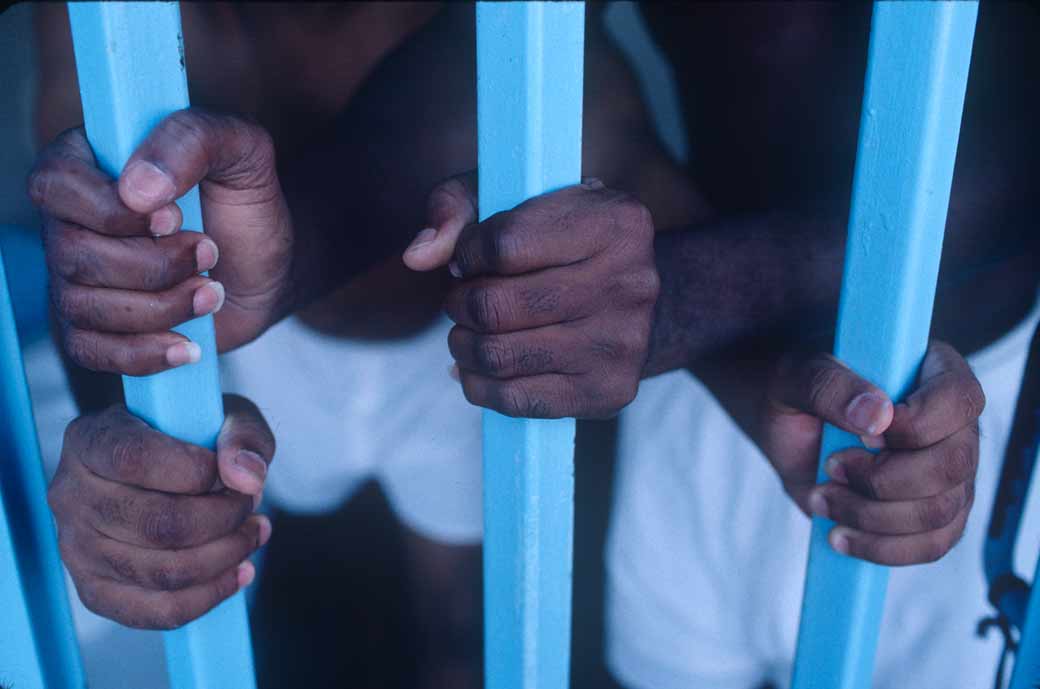
Men crowd a prison cell, where they spend 23 hours a day, in Anderson County, Texas, in 2000.
Photo: Andrew Lichtenstein/Getty Images