The Presumption of Guilt
Scroll for moreAfrican Americans are burdened with a presumption that they are dangerous and guilty.
Slavery in America was justified by a narrative of racial hierarchy: the belief that Black people were inferior, and therefore unfit for freedom. This idea of racial difference survived the formal abolition of slavery and was reaffirmed in the decades that followed with a new narrative: that Black people were naturally prone to violent and criminal behavior. This narrative of guilt and dangerousness was promulgated to justify a systematic campaign of lynching and racial terrorism, carried out in order to preserve racial order and keep economic, social, and political power in the hands of white people. The presumption of guilt lives on today in virtually all areas of American life.
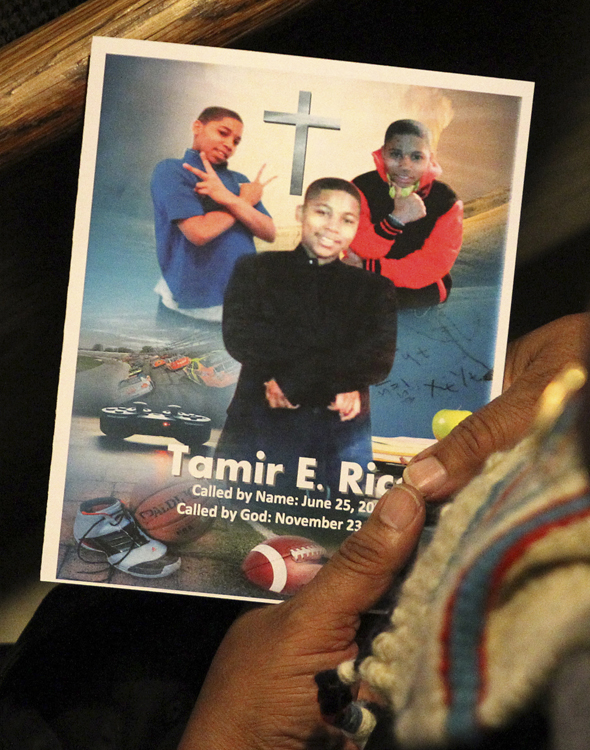
Photo: Reuters/Aaron Josefczyk
While the presumption of innocence is the bedrock principle of American criminal justice, people of color — and African Americans in particular — are assigned a presumption of guilt and criminality. This presumption follows Black and brown people at schools, in parks and stores, and even on their own property. Nowhere is the presumption of guilt more evident than in the modern criminal justice system, where African American men are six times more likely to be incarcerated than white men.
Black people are also more likely to live in heavily policed neighborhoods, where dangerous — and even deadly — encounters with law enforcement have become routine. Not only are African Americans at greater risk of being injured or killed in an encounter with police, but the same bias also protects perpetrators from punishment by assigning fault to the victim. Rarely is law enforcement held accountable for taking Black lives.
The presumption of guilt is especially evident in the way children of color are treated in the criminal justice system. Black children are more than twice as likely as white kids to be arrested, and studies show this disparity does not exist because Black children are committing more crimes. The presumption of guilt and dangerousness marks youth of color for disparately frequent stops and searches; disproportionate contact with the juvenile justice system; harsher charging decisions and disadvantaged plea negotiations; a decreased likelihood of being granted bail and diversion; an increased risk of wrongful convictions and unfair sentences; and higher rates of probation and parole revocation.
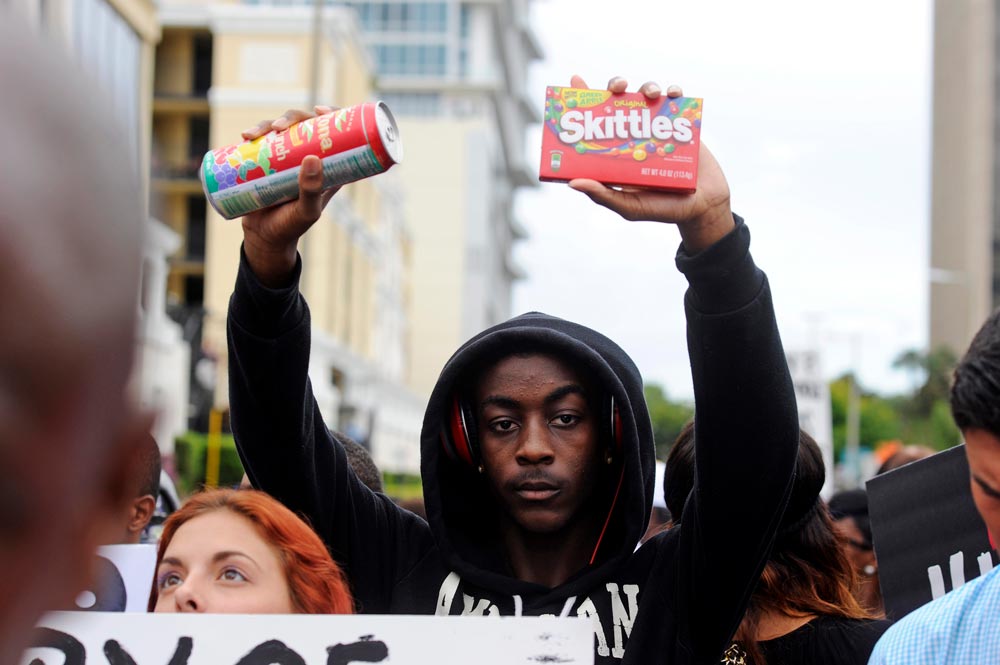
A young man holds iced tea and Skittles at a rally for Trayvon Martin, who was killed in Florida in 2013 while walking home with those items.
Photo: Reuters/David Manning