The Absence of Rehabilitation as a Guiding Principle
Scroll for moreAmerica’s criminal justice system is defined by racial difference, punishment, and profit.
Many European countries incarcerate people in facilities designed to promote social reintegration and rehabilitation. In contrast, America’s criminal justice system is shaped by a commitment to racial difference, punishment, and profit. When the formal abolition of slavery left a void in the Southern labor market, the criminal justice system became the primary means of continuing racialized involuntary servitude. This practice laid the foundation for the non-rehabilitative system of forced labor and warehousing that we tolerate today.
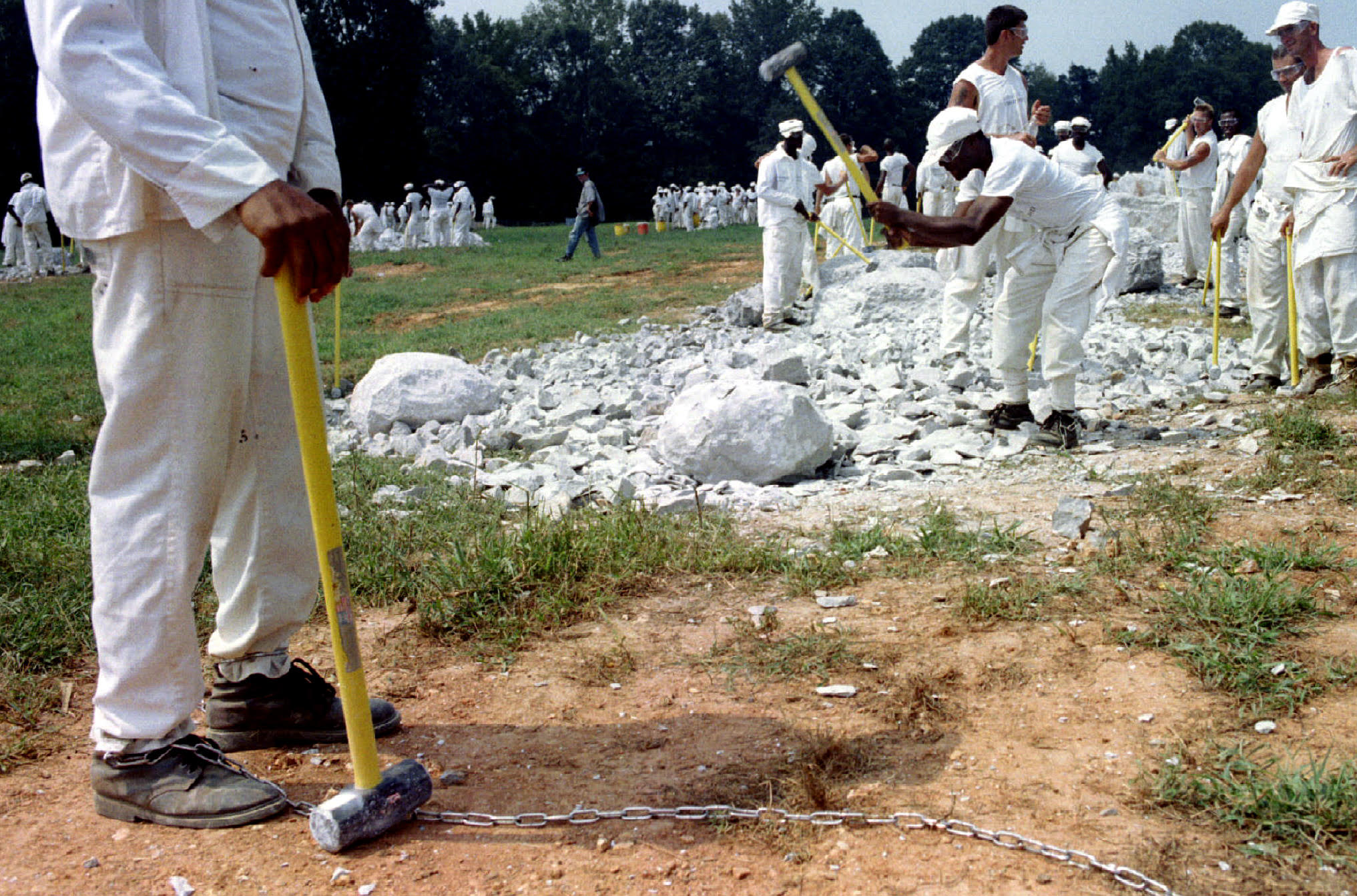
Photo: AP Photo/Gerald Herbert
European countries including Germany, Norway, and the Netherlands incarcerate people at approximately one-tenth the rate of the United States, for much shorter periods of time, and under conditions aimed at social reintegration and rehabilitation. By focusing on rehabilitation, these countries have some of the lowest recidivism rates in the world. In Norway, only 20 percent of people released from prison are ever re- arrested. In contrast, over 76 percent of people released from American prisons are re-arrested within five years.
History tells us that America’s criminal justice system has never been committed to rehabilitation. The Thirteenth Amendment, ratified in 1865, made slavery and involuntary servitude unconstitutional “except as punishment for crime.” Following emancipation, the criminal justice system became one of the primary means of continuing the legalized involuntary servitude of African Americans.
Southern states passed discriminatory “Black Codes” to arrest and imprison large numbers of Black people, then leased them to private individuals and corporations in a system of convict leasing. While states and companies profited, incarcerated workers earned no pay and faced inhumane, hazardous, and often deadly work conditions. By the middle of the 20th century, states abandoned convict leasing due to industrialization and political pressures, and turned to chain gangs and prison farms.
This legacy continues to influence the criminal justice system. The Louisiana State Penitentiary is named “Angola,” after the African country from which enslaved people were kidnapped and forced to work the land when it was a private plantation. Incarcerated men at Angola are still forced to labor in the fields. Eighty percent of Angola’s imprisoned men are Black, and its warden has compared the grounds to “a big plantation in days gone by.” Almost two centuries after enslavement, incarcerated men are paid between 4 and 20 cents per hour to pick cotton and cut sugarcane.
The Mississippi State Penitentiary, known as “Parchman Farm,” opened in 1901 and was built on a former slave plantation composed of 200,000 acres of “the world’s richest cotton land.” Today, nearly 70 percent of the men incarcerated at Parchman Farm are Black. As recently as 2010, a federal court held that “prisoners have no enforceable right to be paid for their work under the Constitution.” Confining people to forced labor has been justified by courts as a legitimate way to advance the punitive goals of the criminal justice system.
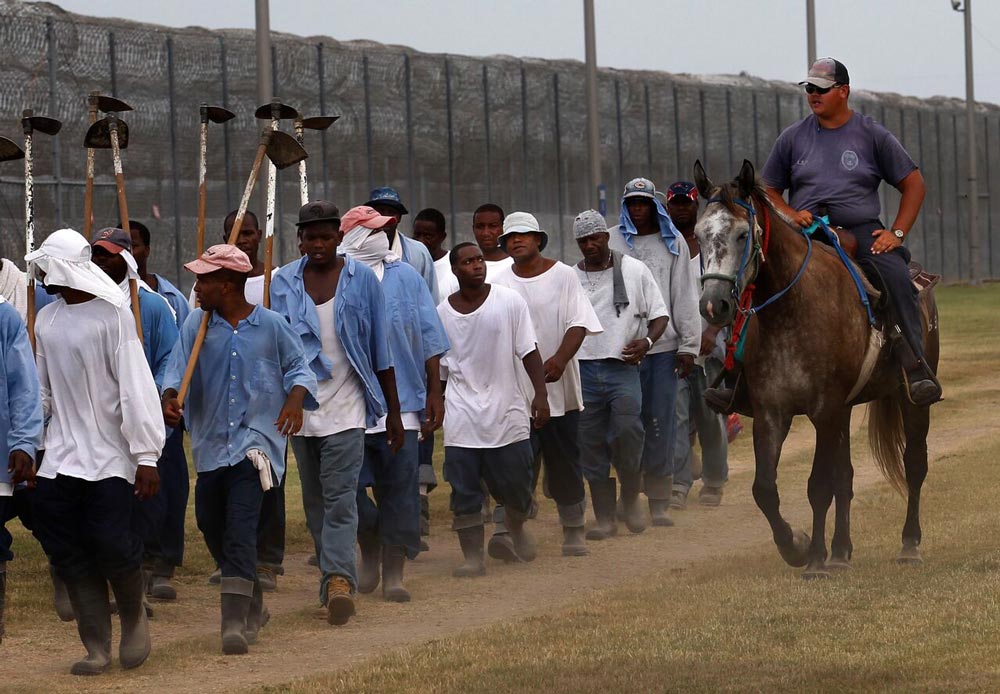
An officer on horseback guards incarcerated field workers at Angola Prison in Louisiana, 2011.
Photo: AP Photo/Gerald Herbert