False Narratives About Black Girls
Scroll for moreBlack girls have been depicted as older, more sexual, and more aggressive than white girls.
Black girls face presumptions of violence and menace in educational settings and in the criminal justice system. The biases that animate discrimination and unfair treatment of Black girls are rooted in presumptions dating back to the era of slavery. During this time, Black girls were treated not as children in need of protection, comfort, and care, but as pieces of property who could be separated from parents and siblings and subjected to sexual abuse and assault because they did not experience the same feelings as white children. This narrative has proven persistent and dangerous.
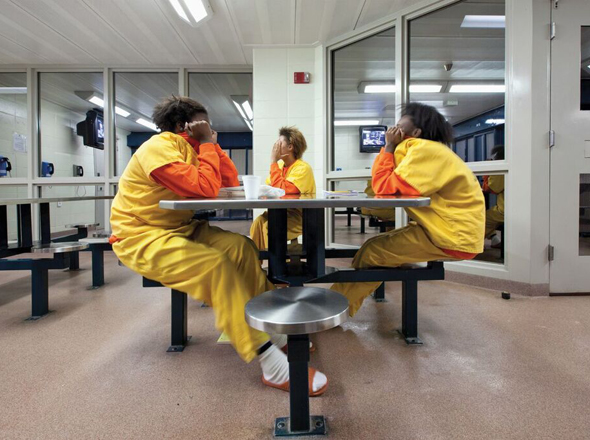
Photo: Richard Ross
For generations, Black girls have been depicted as older, more sexual, and more aggressive than white girls. In the era of enslavement and its aftermath, an accusation by a white girl of impropriety, however minor, could prompt swift death for a Black man or boy. The endemic, nationwide sexual exploitation and assault of Black girls, meanwhile, was not considered a crime. Instead, this abuse was justified by the myth that Black girls do not experience pain or suffering in the same way as white children.
This narrative of racial difference continues to shape behavior today. A 2017 study by the Georgetown Law Center on Poverty and Inequality revealed astonishing levels of bias against Black girls, finding that adults see Black girls as older than white girls of the same age; less in need of nurturing, protection, support, and comforting than white girls; and more independent and as knowing more about adult topics, including sex, than white girls.
These false narratives help explain some of the dramatic disparities that exist in criminal and educational systems. Black girls are five times more likely to be suspended than white girls, and twice as likely to be suspended as white boys. Black girls are nearly three times as likely to be referred to the juvenile justice system, and 20 percent more likely to be charged with a crime than white girls. One study found that prosecutors dismissed only 30 percent of cases against African American girls, while dismissing 70 percent against white girls.
In the United States, more than 200,000 women and girls languish in confinement, a number that has increased more than 800 percent since 1980. This unprecedented increase in the number of incarcerated women has devastated communities across the country.
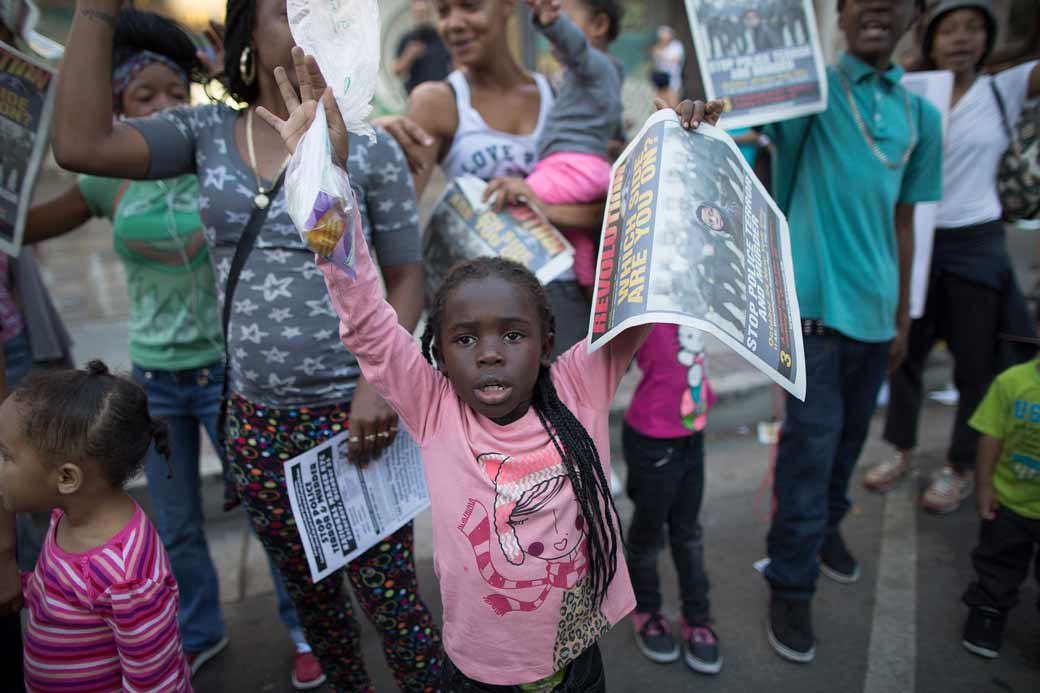
Children march in the ”National Day of Protest to Stop Police Brutality, Repression and the Criminalization of a Generation” in Los Angeles in 2015.
Photo: David McNew/Stringer