Black Families Living with the Burden of Presumed Criminality
Scroll for moreUnaddressed histories of trauma and the burden of presumed criminality have created a unique legacy of challenges for Black families.
Unaddressed histories of trauma and the burden of presumed criminality have created a unique legacy of challenges for Black families. The trauma attached to mass violence has led to insecurity, mistrust, and disconnection, and has contributed to chronic generational poverty and disparate outcomes. Black families have coped with these scars in silence while navigating their own survival.
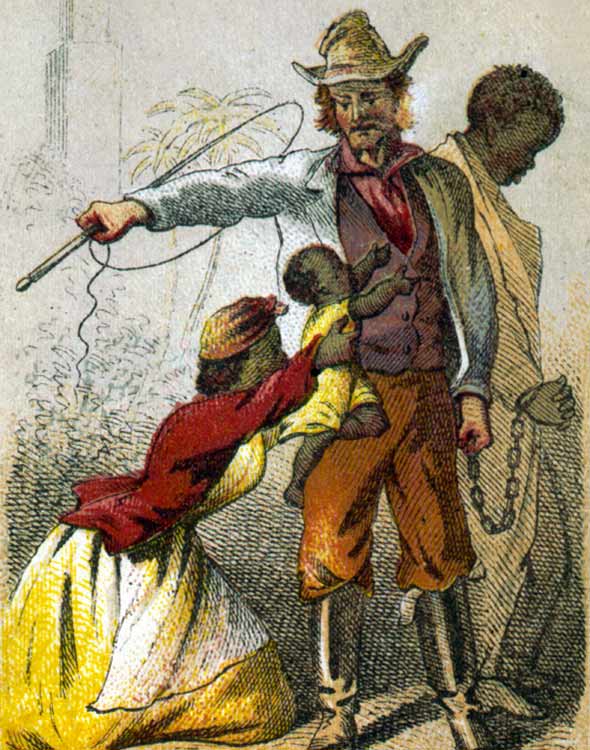
Photo: Alamy Stock Photos
Throughout centuries of enslavement, Black people were kidnapped, separated from their families, and stigmatized with subhuman status. During the decades of terrorism that followed, survivors and witnesses of gruesome racial spectacle lynchings were forced to flee. These Black Americans escaped to new cities and towns, only to have their trauma compounded by the indignity of segregation. Many Black families remain too traumatized to talk about lynched family members or the humiliation of Jim Crow.
Today, Black men and women must survive mass incarceration, which further separates families and traumatizes communities. Some 1.5 million Black men are “missing” from their loved ones due to incarceration or premature death. At the dawn of the 21st century, one in three Black baby boys is expected to go to jail or prison in his lifetime.
For generations, Black parents have been forced to have “the talk” with their children. The specifics of “the talk” have evolved, but its overarching theme has remained the same: living with the burden of presumed criminality requires adapting to survive. In the era defined by racial terrorism, the talk focused on complying with social and racial rules. Today, the talk centers on surviving interactions with law enforcement. Without adopting behaviors and insights unique to their communities, Black families could not have survived centuries of subjugation in America.
Survival itself has never been guaranteed. It is a victory and a powerful form of resistance. African Americans who survive are truth-tellers and witnesses for justice. They tell stories about hardship and suffering, but also about hope and resilience. These stories of survival and perseverance are shared throughout this museum.
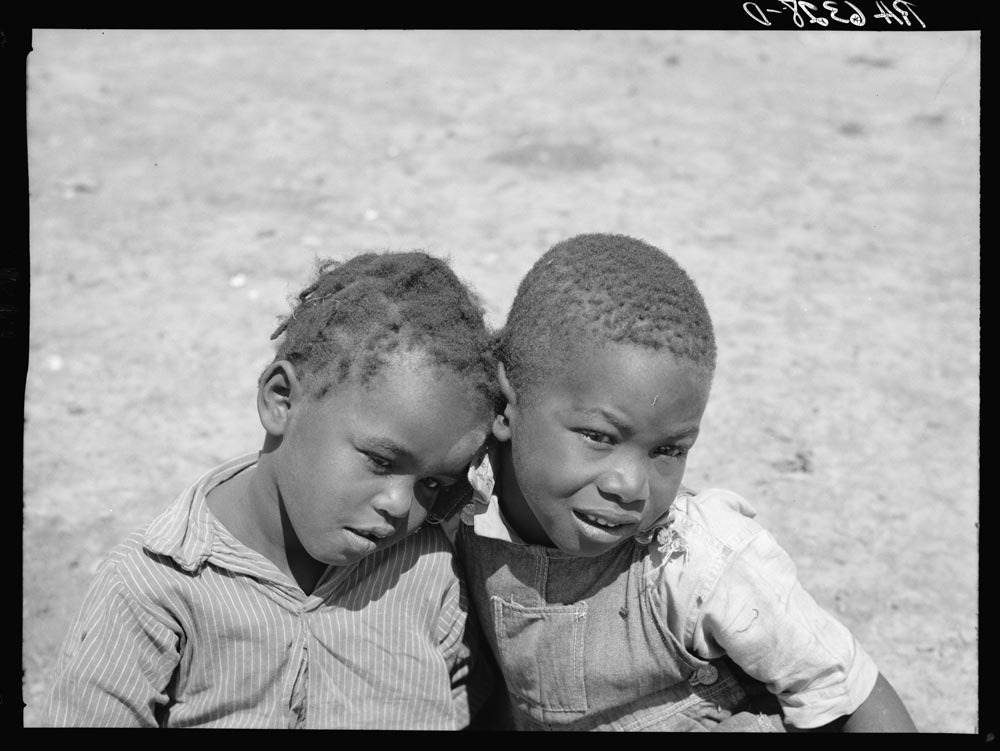
Children of sharecroppers.
Photo: Carly Mydans/Library of Congress