Private Prisons and the Prison Industrial Complex
Scroll for moreHuge profits from the warehousing of human beings create perverse incentives and hinder efforts to reform sentencing laws and to reduce the prison population.
Powerful economic forces fuel America’s unprecedented rate of incarceration. The number of private prisons in the United States increased from five in 1998 to 100 in 2008. By 2010, the nation’s two largest private prison companies imprisoned more than 120,000 people and took in nearly $3 billion in revenue.
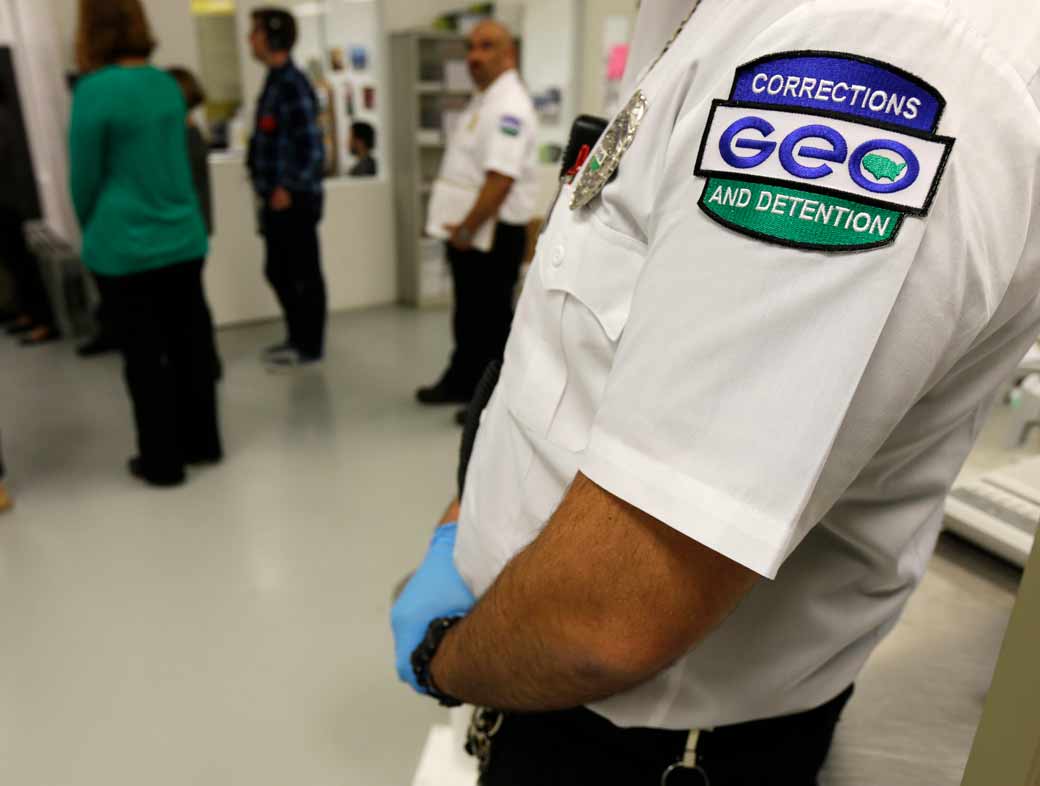
GEO Group, the second-largest private prison company, has been sued for forcing incarcerated people
Huge profits from the warehousing of human beings create perverse incentives and hinder efforts to reform sentencing laws and reduce the prison population. Private prison contracts routinely include “lock-up quotas” that require state governments to maintain a minimum level of occupancy or pay a penalty for uninhabited beds. These quotas guarantee that private prison companies profit even when crime rates decrease. When the crime rate in Colorado dropped by a third in recent years, the state was forced to pay a $2 million penalty after it failed to meet its lock-up quota. Private prison companies also fund expensive lobbying efforts to influence legislation and policy at the state and federal levels. In Florida alone, 30 lobbyists advocate for private prison contracts and policies.
In addition to private prisons, states increasingly contract with private companies for the provision of necessary prison services, including healthcare, phone access, and food. Predictably, companies providing these services have maximized their profits by charging exorbitant rates and cutting costs wherever possible. The largest companies have been sued over atrocious food service and poor medical care, yet they continue to receive state contracts.
For years, private phone companies have exploited the families of the incarcerated by charging prohibitive rates for calls from loved ones in prison. Rates are set by contracts between these companies and state and local governments, which often receive “commissions” or kickbacks. As a result, family members in some states pay as much as $20 for a 15- minute phone call.
Although the explosion of the American prison population predates the expansive network of private prisons and related profit-seeking enterprises that exist today, these companies present a powerful barrier to prison and criminal justice reform.