America's Untouchables
Scroll for moreEven a minor criminal record can block a person’s access to educational and employment opportunities.
Today, nearly a third of America’s adult population has a criminal record. This rate is even higher for African Americans. Criminal records, which include petty offenses and arrests that never led to convictions, can prompt a lifetime of serious consequences that relegate millions of people to society’s margins, creating an “untouchables” caste in America.
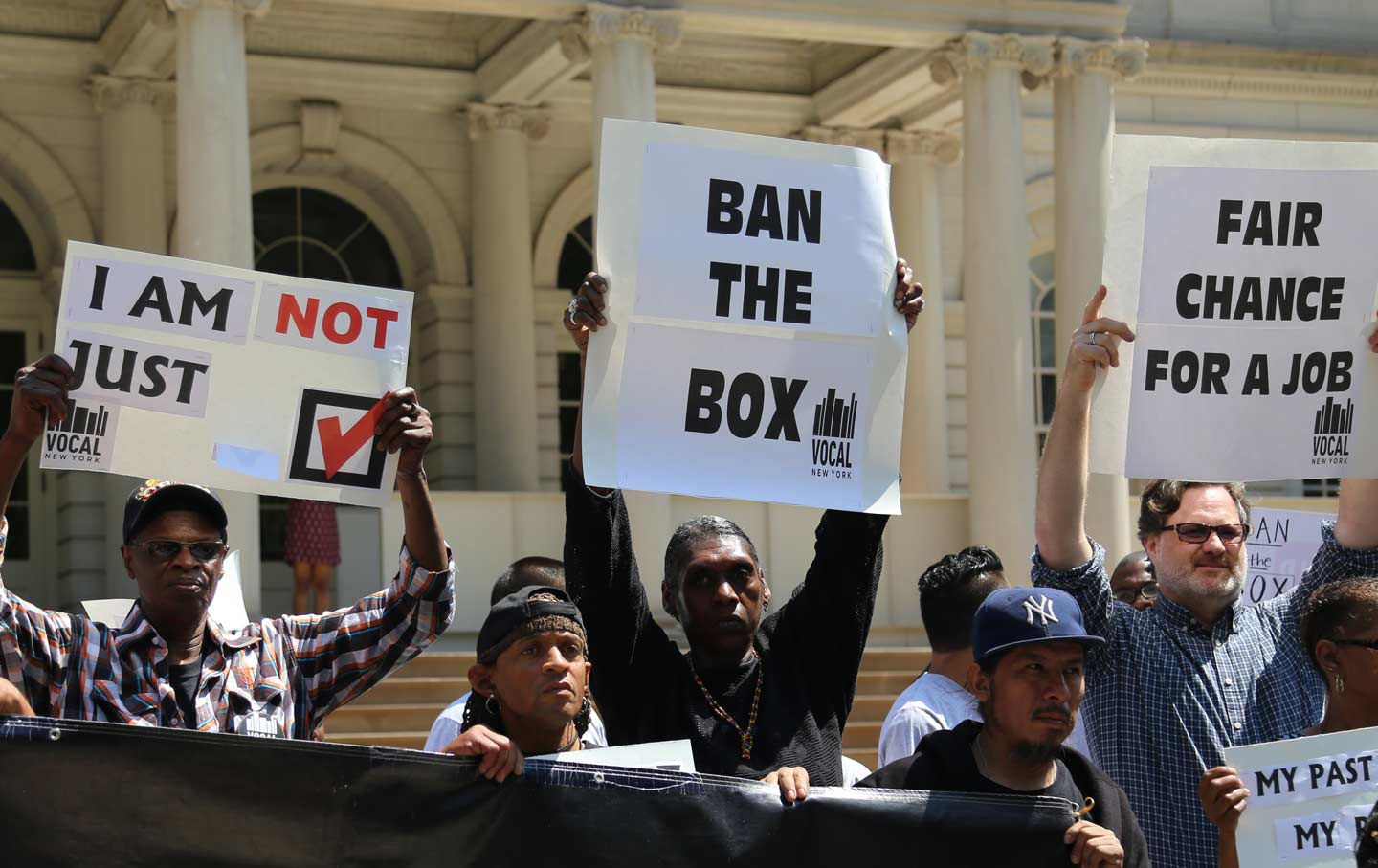
Photo: VOCAL-NY
Even a minor criminal record can block a person’s access to educational and employment opportunities. Many private landlords and public housing projects have policies against renting to people with criminal records. More than half the states place restrictions on where people convicted of certain crimes can live, leaving them at risk of homelessness. At the same time, federal law allows states to impose a lifetime ban on food stamps and federal cash assistance for individuals with drug-related felonies. This policy has proven especially detrimental to formerly incarcerated mothers, who are more likely to be single parents or caregivers.
A project to catalog these barriers and restrictions in 17 jurisdictions identified more than 17,000 “collateral consequences.” Although these consequences are technically “collateral,” they extend long after an individual has completed his or her sentence.
Each year, more than 600,000 citizens return to communities across America after serving time in federal and state prisons. Employment is critical to successful re-entry, but studies reveal that when job applicants are forced to disclose the existence of a criminal record, their chance of being called for an interview drops by 50 percent. This negative effect is twice as large for African Americans. Even as many formerly incarcerated people struggle to find employment, they are often required to pay steep court fines and supervision fees. Failure to pay can preclude a person from being able to obtain a driver’s license and can result in additional incarceration.
More than 60 percent of formerly incarcerated people are unemployed one year after being released. Recently, several states and cities recognized that the inability to find work increases recidivism and have enacted “fair-chance hiring” or “ban the box” policies to help formerly incarcerated people secure employment, rebuild their lives, and reintegrate into their communities.
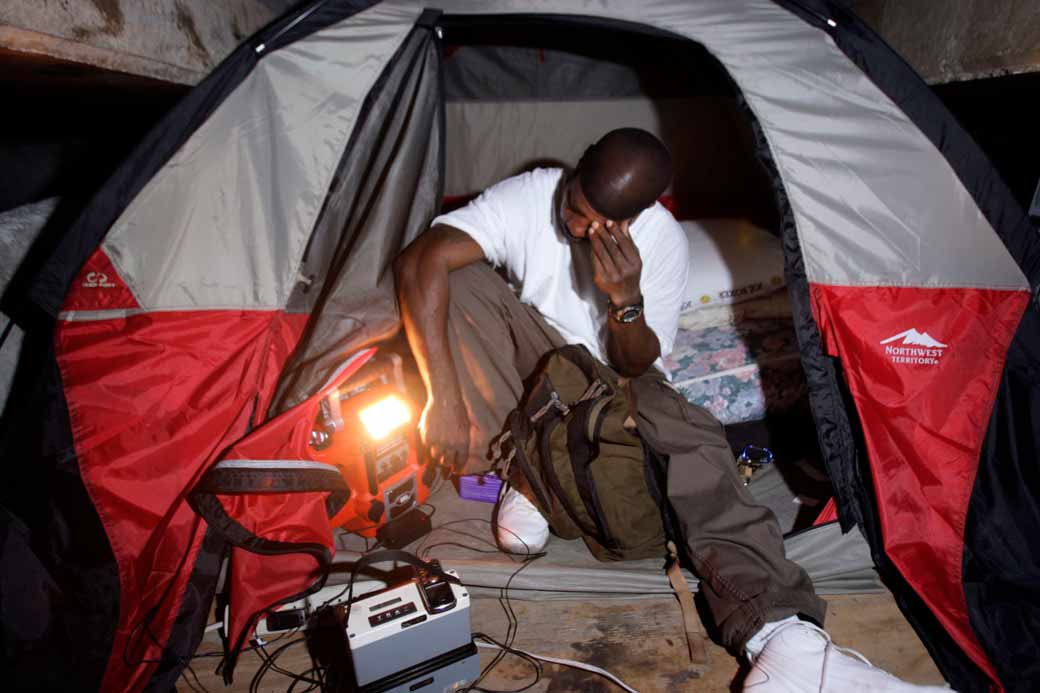
A formerly incarcerated man sits in his tent below a bridge in Miami, Florida, in 2008.
Photo: Charles Trainor Jr./Miami Herald/MCT via Getty Images