Felon Disenfranchisement
Scroll for moreFelon disenfranchisement laws are the modern manifestation of racialized voter suppression efforts.
Felon disenfranchisement laws, which deny people the right to vote based on a prior criminal conviction, are connected to a long history of white lawmakers intentionally suppressing the Black vote. These laws are the modern manifestation of racialized voter suppression efforts.
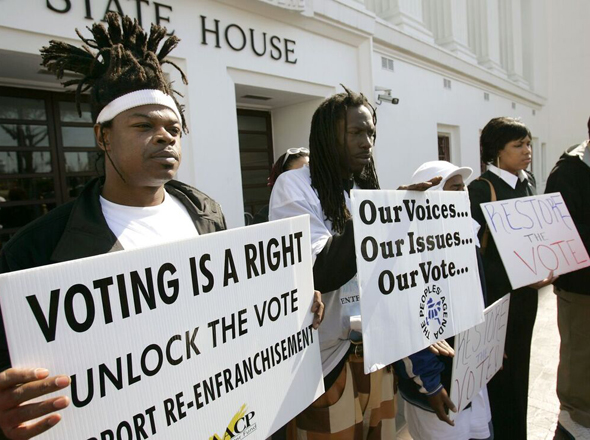
Photo: AP Photo/Robert Carr
After the Fifteenth Amendment outlawed racial discrimination in voting in 1870, many states continued to suppress the African American vote. Between 1890 and 1910, all Southern and border states passed felon disenfranchisement laws, poll taxes, and literacy tests to prevent African Americans from voting.
Felon disenfranchisement laws were especially common in states with the largest populations of African Americans. Lawmakers were explicit about their aims. In 1901, Alabama amended its constitution to expand disenfranchisement to all crimes involving “moral turpitude” — including misdemeanors and even non-criminal acts — after the president of the constitutional convention argued the state needed to avert the “menace of Negro domination.”
Because the criminal justice system overwhelmingly targeted African Americans, state legislatures knew that a seemingly race-neutral policy like felon disenfranchisement would disproportionately impact African Americans. Felon disenfranchisement laws and other discriminatory policies, in conjunction with violence and intimidation, nearly eliminated the Black vote in the South. By 1940, only 3 percent of voting-age African Americans were registered to vote in Southern states.
The Voting Rights Act of 1965 was intended to address this history of racially motivated barriers to voting, but many states continued to undermine voting opportunities in minority communities by disenfranchising more and more people based on their criminal records.
Today, felon disenfranchisement laws bar one in every 13 Black adults from voting. In Florida, Kentucky, Tennessee, and Virginia, 20 percent of the African American voting age population is disenfranchised. That number is 15 percent in Alabama and Mississippi. Despite these figures, felon disenfranchisement has remained almost immune to judicial challenge because a loophole in the Fourteenth Amendment allows states to eliminate the right to vote for people who participate in “rebellion or other crime.”
In addition to diminishing the political power of African American communities, felon disenfranchisement undermines the re-entry process by perpetuating the stigma and isolation that formerly incarcerated people experience and it denies the vote to the very people who have direct experience with the criminal justice system.
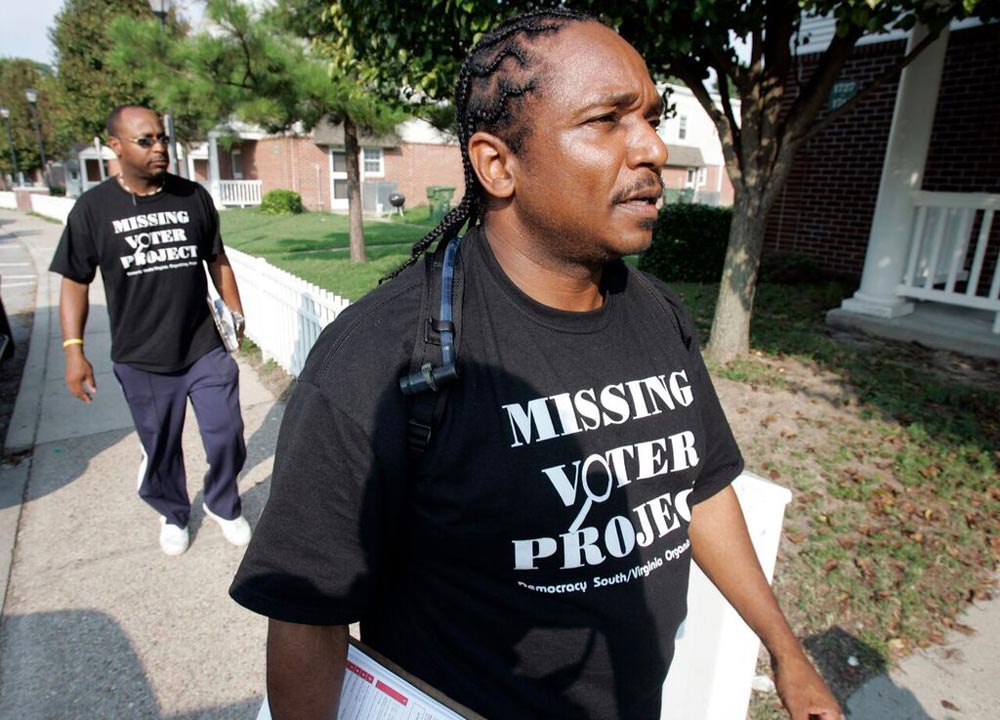
One of every 13 African Americans of voting age is disenfranchised, a rate more than four times greater than that for non-African Americans.
Photo: AP Photo/Steve Helber