Conditions of Confinement
Scroll for moreAmerica’s extraordinary incarceration rate has created dangerously overcrowded prisons.
The United States now incarcerates one in 100 people, which has created dangerously overcrowded jails, prisons, and detention facilities. Prisons in America are marked by violence, sexual assault, and suicide, and no meaningful oversight exists to correct these symptoms of overcrowding and hopelessness.
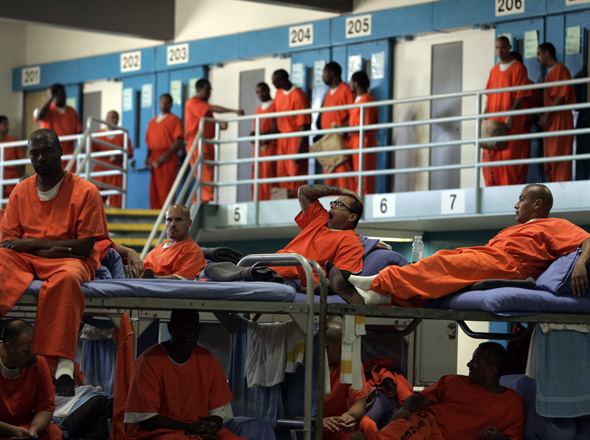
Photo: Gary Friedman/Los Angeles Times via Getty Images
As the incarcerated population exploded to exceed two million people, America’s prisons descended into violence and chaos. In California, due to medical neglect or malfeasance, an average of one incarcerated person was dying per week. In 2011, the Supreme Court required California to release up to 46,000 people from prison because the state’s prison conditions were “incompatible with the concept of human dignity.” Justice Stephen Breyer described the prisons as “horrendous,” with men and women “found hanged to death in holding tanks where observation windows are obscured with smeared feces, and discovered catatonic in pools of their own urine after spending nights locked in small cages.”
Southern states incarcerate people at the highest rate in the country, in prisons built for a fraction of the population they house. In 2014, the Department of Justice found that the women in Alabama’s Tutwiler Prison were confined in an “environment with repeated and open sexual behavior, including: abusive sexual contact between staff and prisoners . . . and deliberate cross-gender viewing of prisoners showering, urinating, and defecating.” In 2017, a federal court found that mental health services in Alabama were “horrendously inadequate” and led to a “skyrocketing suicide rate.”
Throughout the country, 75,000 people live in solitary confinement, spending 23 or more hours a day alone in claustrophobic cells “that are not much larger than a king sized bed.” Cut off from human contact, people who have survived solitary confinement recall making “friends” with insects and inanimate objects to combat their loneliness. Solitary confinement causes and exacerbates anxiety, paranoia, depression, and hallucinations. Fifty percent of prison suicides nationwide are committed by people held in isolation.
Justice Anthony Kennedy recently observed that “the condition in which prisoners are kept simply has not been a matter of sufficient public inquiry or interest.” This lack of public attention is no accident. Incarcerated people’s ability to communicate outside prison walls is limited. When people enter prison after sentencing, they have no right to a lawyer and are separated from their families and friends. The Prison Litigation Reform Act of 1996 created specific barriers for incarcerated people seeking to file suit, largely immunizing horrific prison conditions from judicial scrutiny. Homicides, sexual assaults, abuses of power, and suicides in prisons have come to light not through official oversight, but through letters from incarcerated people desperate for safety and lacking any official recourse.
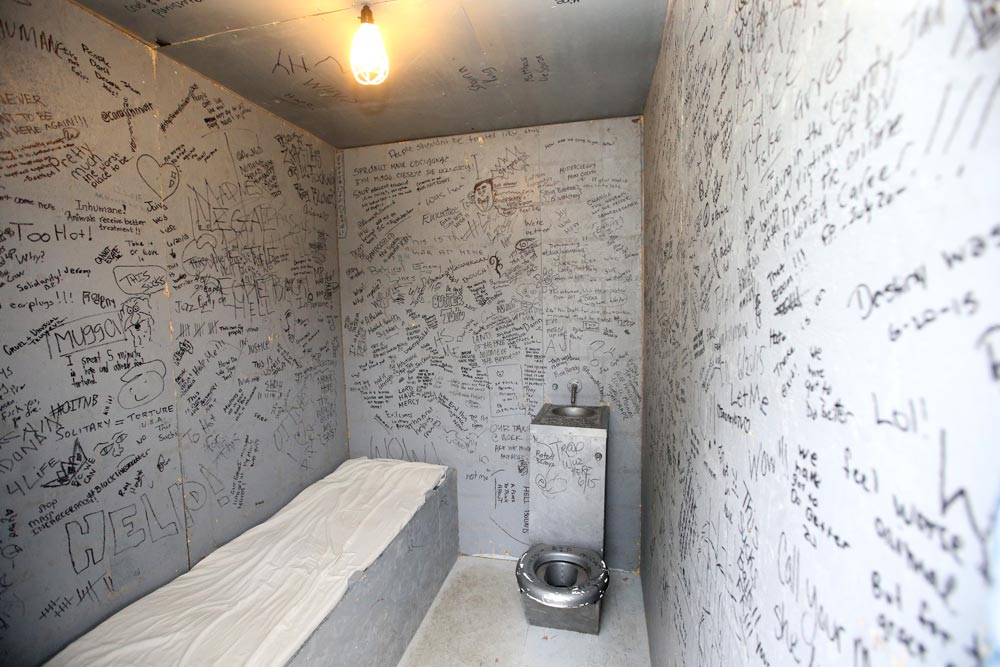
There are more than 80,000 men, women, and children in solitary confinement in America’s prisons.
Photo: Jake West/New Jersey Herald