Harsh Punishment of Children
Scroll for moreThe United States is the only country that routinely condemns children to die in prison.
Influential criminologists warned Americans in the 1990s that young, male, predominately Black “superpredators” would unleash a national crime wave. In response, nearly every state expanded its legal power to punish children. Although this racialized “superpredator” theory was wrong, its legacy lives on. The United States remains the only country in the world that routinely condemns children to die in prison. A disproportionate number of these children are Black.
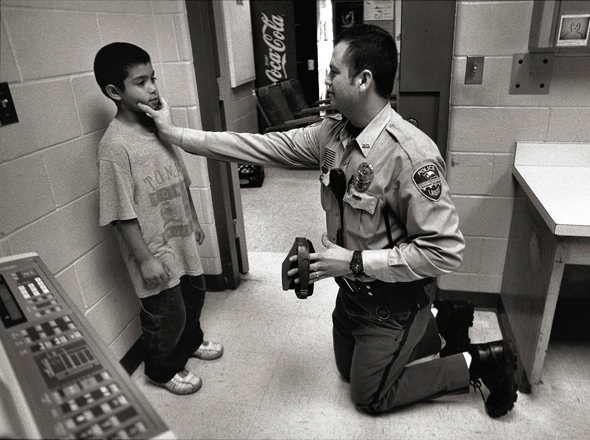
Photo: Steve Liss
In the 1990s, a generation of young people of color were labeled “superpredators”: “radically impulsive, brutally remorseless . . . elementary school youngsters who pack guns instead of lunches . . . [and] have absolutely no respect for human life.” Much of this frightening language was racially coded. In response, almost every state expanded its legal power to try children in adult courts, place them in adult prisons, and sentence them to death or life imprisonment without parole.
Criminologists have since conceded that this racialized “superpredator” theory was wrong, but its impact lingers. Thirteen states have no minimum age for trying children as adults, and children as young as eight have been prosecuted in criminal court. The Supreme Court banned the execution of children in 2005, but by 2010 more than 3,000 American children were serving life-without-parole sentences that condemned them to die in prison. Many were sentenced under rules that barred judges from considering their youth at all.
Two recent Supreme Court decisions – Graham v. Florida and Miller v. Alabama – greatly reduced states’ power to sentence children to life without parole and provided thousands of “juvenile lifers” an opportunity to be re-sentenced and released, but did not wholly abolish death-in-prison sentences for children. As a result, the United States remains the only country in the world that routinely condemns children to die in prison. Although African Americans constitute only about 13 percent of America’s population, more than 56 percent of children sentenced to life without parole are Black. The racial disparity is even greater for condemned children under the age of 15.
Each day in America, approximately 10,000 children are housed in adult jails and prisons. These children are five times more likely to be sexually assaulted and 36 times more likely to commit suicide than young people in juvenile facilities.
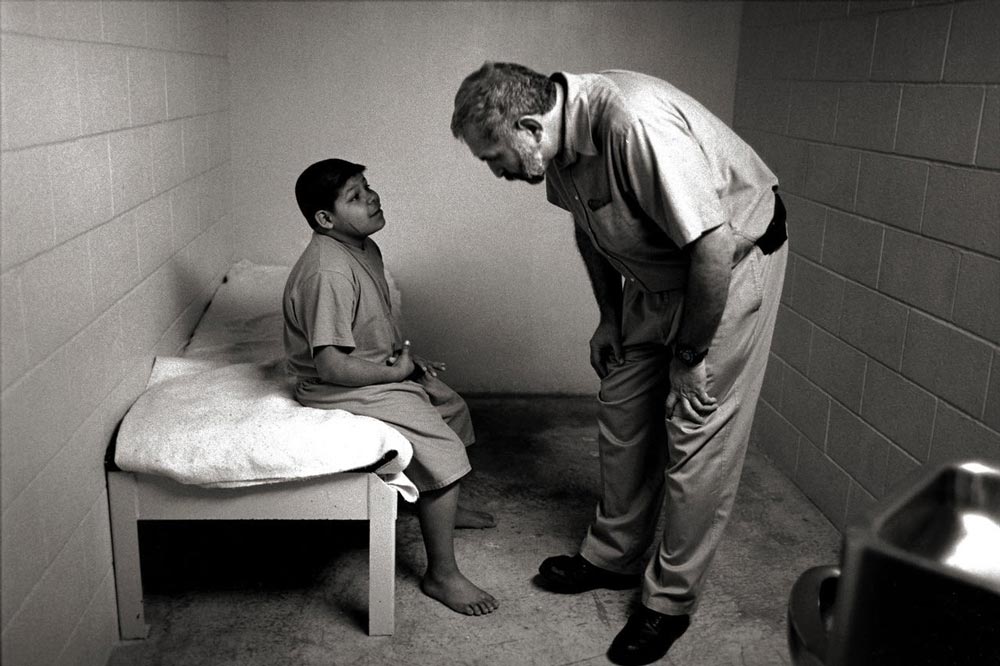
An incarcerated child speaks with an officer at a juvenile detention facility near Laredo, Texas.
Photo: Steve Liss